
TEMPLE MILLING COMPANY (106 West Bruce St.)
Temple Milling Company played a quiet but meaningful role in the daily life of the Parton family. Like many families in rural East Tennessee during the 1940s and 1950s, the Partons made every dollar stretch as far as possible. When flour was purchased from Temple Milling Company, the cotton sacks that once held the flour were far too valuable to throw away. Instead, Dolly Parton’s mother, Avie Lee Parton, saw opportunity in what others might have considered simple packaging.
Avie Lee carefully selected flour sacks with attractive patterns and colors, then washed, cut, and transformed the sturdy cotton fabric into dresses, shirts, aprons, and other clothing for her children as well as home décor – like curtains. With twelve children to care for and limited financial resources, sewing was not simply a hobby. It was a practical skill that helped meet the family’s needs and a tangible expression of a mother’s love, sacrifice, and creativity.
Memories of Dolly at Temple Milling Co.
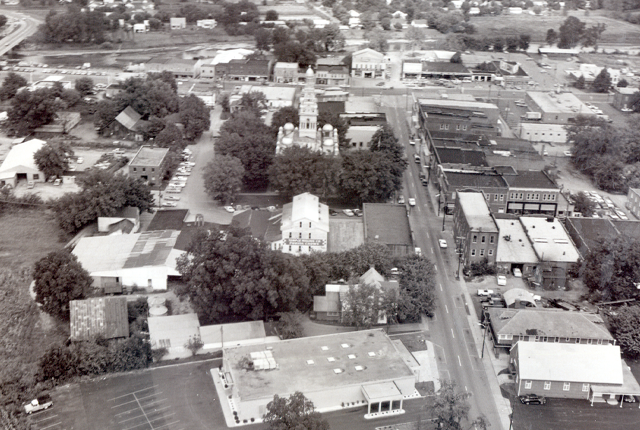
Aerial view of Temple Milling Company and downtown Sevierville.
Temple Milling Company was a gathering place for local farmers, especially when it came time to grind corn. Marie Temple recalls their toll-milling program that allowed farmers to bring in dried corn kernels for processing. Once the corn was milled, they received the finished cornmeal back, with the mill retaining a small percentage as payment for its services.
This arrangement was common in rural communities, where cash was often scarce and goods frequently served as a form of currency. The cornmeal produced at the mill might then be traded or used to pay for other services.
In fact, it was a bag of cornmeal from Temple Milling Company that Lee Parton used to pay Dr. Robert F. Thomas for delivering Dolly Rebecca Parton on January 19, 1946. As Dolly has famously said, “I’ve been rolling in the dough ever since.”
About Temple Milling Co.
In 1934, John E. Temple purchased what had originally been Walker Milling Company from Stanley McMahan and changed its name to Temple Milling Company.
The original mill, built in 1920, was destroyed on October 20, 1980, by the most devastating fire downtown Sevierville had seen since the great fire of 1856. A total of 105 men with twelve trucks fought the flames at Temple Milling Company while also keeping the neighboring historic Sevier County Courthouse from burning as well. (For more, read The Night the River Turned Red written by Mary Joyce Temple Hughes).
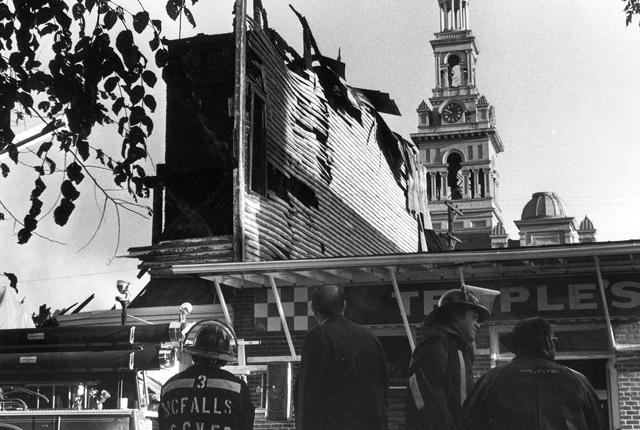
Firefighters worked all night and day to put out a devastating fire at Temple Milling Company on October 20-21, 1980.
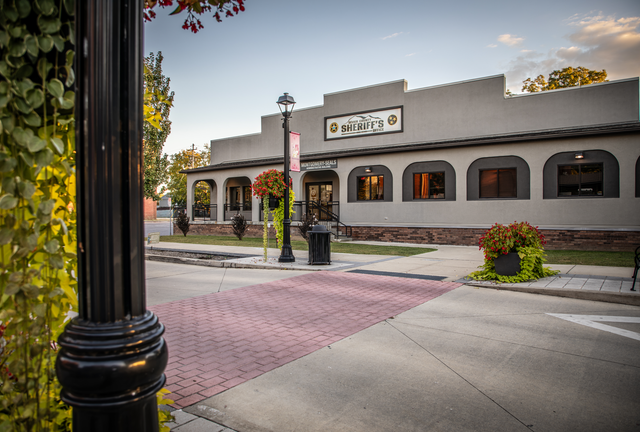
The family rebuilt Temple Milling Company, but without its famous milling equipment which was lost in the fire. The iconic Sevierville business continued to operate for another 21 years. Now the Sevier County Sheriff’s Office occupies the lot – with a stairstep roofline reminiscent of Temple’s original structure.
Jimmie and Marie Temple
John’s son, Jimmie Temple, took over as manager in 1948. In that role, he worked closely with Ralston Purina and Purina Mills for 67 years as a dealer. The brand was so well associated with Temple’s, that the building prominently bore the recognizable Purina checkerboard branding. Jimmie was also responsible for promoting the business and hosted a weekly radio program, “The Jimmie Temple Show,” on WSEV 930AM in the 6:30 a.m. slot from April 1955 to March 2001. His familiar greeting was, “Good morning! If you can put your feet on the floor and walk away from the bed, it’s going to be a good day!” An active participant in civic life, Jimmie also served as mayor from 1959-1963 and Sevier County Commissioner from 1966 to 2014.
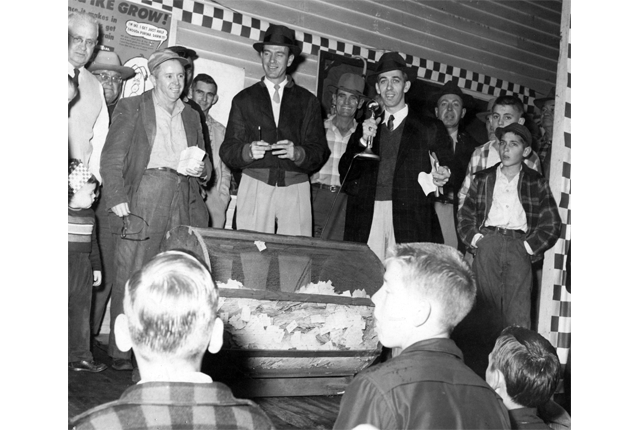
Jimmie Temple (holding the microphone) presides over the annual Mike & Ike drawing at Christmas time. Raffle tickets were drawn to see who would win one of two pigs raised on Purina feed and called Mike and Ike.
Love & Marriage
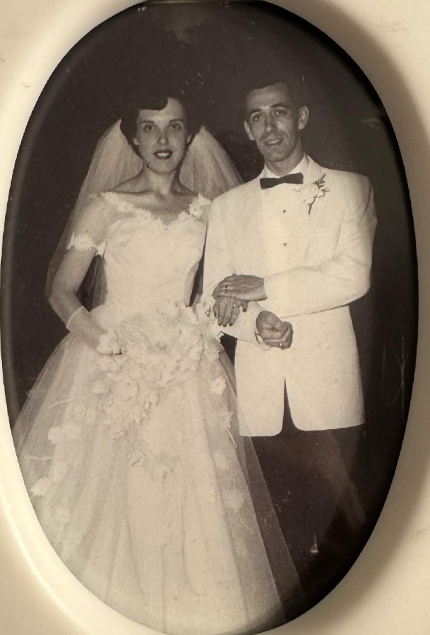
Marie & Jimmie Temple’s wedding day, 1955.
Jimmie Temple met and married Marie Johnson in 1955. The two worked alongside each other at the mill and raised two children, James and Jane. While Jimmie was involved in many aspects of public life, his role as a County Commissioner gave him the opportunity to perform civil marriage ceremonies – an estimated 28,000 ceremonies in all; most of which he performed amongst sacks of flour at the mill. After Temple Milling Company closed in 2001, he began performing wedding ceremonies at his family home, located behind the business on Court Ave. Couples from around the world were united by Jimmie. Marie served as a witness and, later, the couple’s cat, Millie, would sometimes join in. In fact, the couple even had humorous business cards printed for the cat proclaiming her as an “Official Wedding Witness.”
Jimmie Temple’s marriage ceremonies were known for ending with a prayer for the bride and groom and he also gave the couples a card for their wallets which covered “4 Points for a Successful Marriage” and included the date of their marriage and the ceremony number for that year.
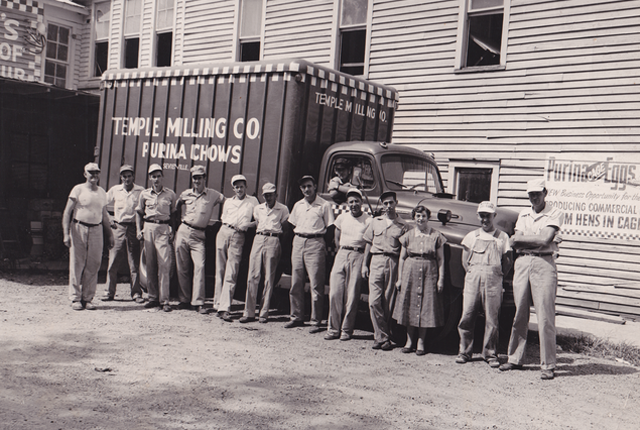
Temple Milling Company employees pose for a photo outside the mill. Fourth and third from the right are Jimmie Temple and his mother, Effie.
